What to Expect, How to Help Them Settle, and What to Ask Before You Bring Them Home
By Herb Locke, Founder of BarkLogue
What Nobody Tells You About Senior Dogs
Most people considering a senior dog ask the wrong questions.
They ask about lifespan. They ask about vet bills. They ask whether an older dog will bond with them.
The question worth asking is simpler.
What is it actually like to live with a dog who has already figured out who they are?
The answer, from dozens of people who have done it, is almost always the same.
It is calmer than you expect. More settled. More immediately real.
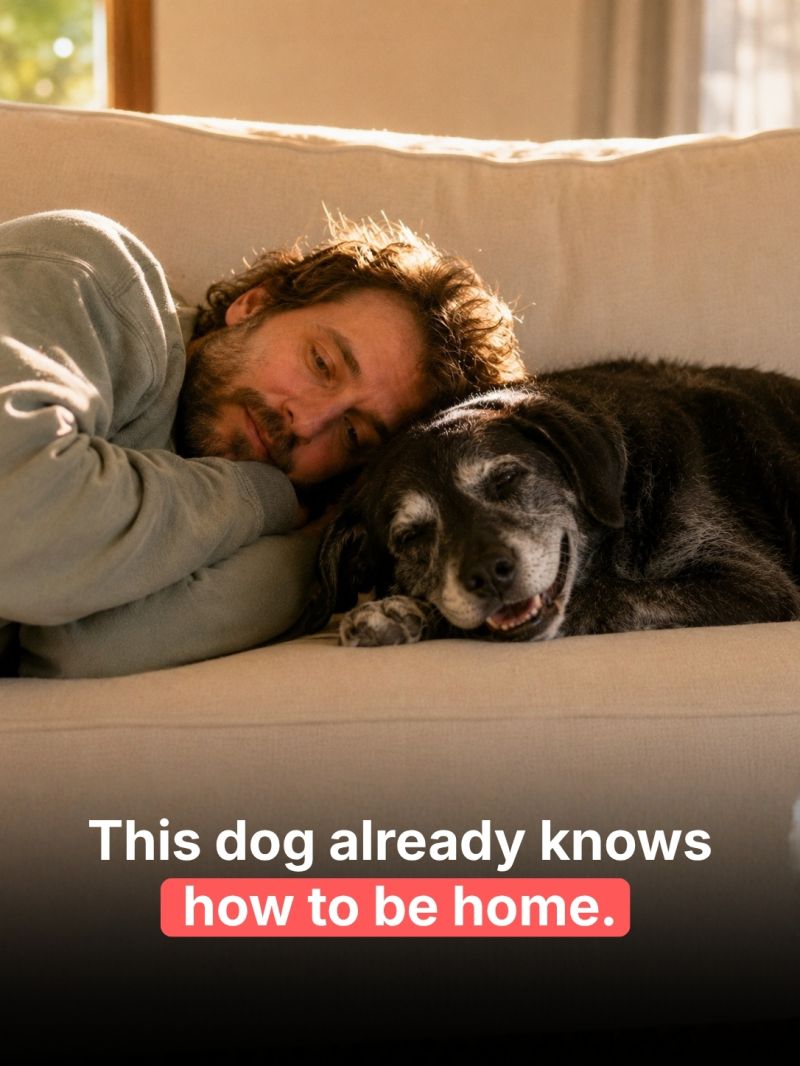
A senior dog is not learning how to be a dog anymore. It already knows. It has preferences, rhythms, and a personality that is fully formed. It fits into a home in a way that a puppy, for all its joy, simply cannot.
What to Actually Expect
The first week
Senior dogs, especially those coming from a shelter, often go very quiet when they first arrive. This is not sadness or rejection. It is processing.
They have been through significant change. Give them space, keep the environment calm, and let them move at their own pace. Do not push interaction.
Most senior dogs begin to show their real personality within 7 to 14 days. Some take a little longer.
The first month
This is when the bond begins to form in a visible way.
Senior dogs tend to attach deeply and specifically. They choose their person and they stay loyal to that choice. Many owners of senior rescue dogs describe the bond as feeling mutual in a way that surprised them, like the dog understood what had happened and made a deliberate decision to trust them.
What settled looks like
A senior dog that is settled will follow you between rooms without anxiety. They will choose to sleep near you. They will show you their preferences, the spot they like, the time of day they want to walk, the way they like to be greeted.
They are not performing for approval. They are just themselves.
The Vet Bill Question
This concern is legitimate and worth planning for honestly.
Senior dogs are more likely to have existing health conditions and more likely to develop new ones. Annual vet visits may become more frequent. Medications for joint pain, thyroid conditions, or dental disease are common.
At the same time, the adoption fee for a senior dog is almost always significantly lower than for a younger animal. Many shelters waive fees entirely for senior dogs.
What to do before adopting:
Ask the shelter for a full health history. Ask specifically about any current medications and their monthly cost. Ask whether the dog has had a recent blood panel and what it showed.
Consider pet insurance. Premiums are higher for older dogs but the coverage can significantly reduce out-of-pocket costs for unexpected illness.
Go in with a realistic budget and clear information. Senior dog ownership is manageable financially for most people who plan for it.
Questions to Ask the Shelter Before You Commit
These questions will tell you more than any profile.
- What is this dog’s daily routine at the shelter?
- How do they behave when left alone?
- Have they lived with other dogs or cats before?
- Are they comfortable with strangers or do they need slow introductions?
- Do they have any known pain or mobility issues?
- What do they love most?
- What makes them uncomfortable?
- Has anyone spent significant time with them outside of feeding and cleaning?
The answers to the last two questions especially will tell you whether this dog’s personality matches your life.
How to Help Them Settle
Keep the first week quiet. Limit visitors, loud environments, and new experiences. Let the dog learn that your home is safe before introducing anything new.
Establish a routine immediately. Senior dogs find security in predictability. Feed at the same times, walk at the same times, and keep the daily structure consistent.
Let them choose the pace of affection. Some senior dogs are immediately tactile and want contact. Others need time before they are comfortable being touched for extended periods. Follow their lead.
Give them a space that is entirely theirs. A bed in a quiet corner, away from high-traffic areas, where they can rest without being disturbed. Senior dogs sleep more than younger dogs and need that space to be reliably calm.
Watch for pain signals. Senior dogs are practiced at masking discomfort. Watch for stiffness after rest, reluctance to use stairs, changes in appetite, and tension in the face when resting. If you see two or more of these consistently, book a vet visit.
One Last Thing
There is a theory among people who work with rescue animals that senior dogs know what the alternative was.
Nobody can prove that.
But spend time with a senior shelter dog in their first month in a home and you will understand why people say it.
The gratitude is not imagined. The bond is not slower to form because of the dog’s age. In most cases it is faster, deeper, and more specific than anything a puppy delivers in its first chaotic year.
Senior dogs are the ones most often passed over.
They are also, according to almost everyone who has adopted one, the ones people wish they had chosen sooner.
Created by BarkLogue. Helping shelters tell the stories that find animals homes. barklogue.com