Why Donors Stop Giving and What Actually Brings Them Back
By Herb Locke, Founder of BarkLogue
The Real Reason Donors Leave
Most shelters assume donors stop giving because they found another cause or ran out of money.
The data tells a different story.
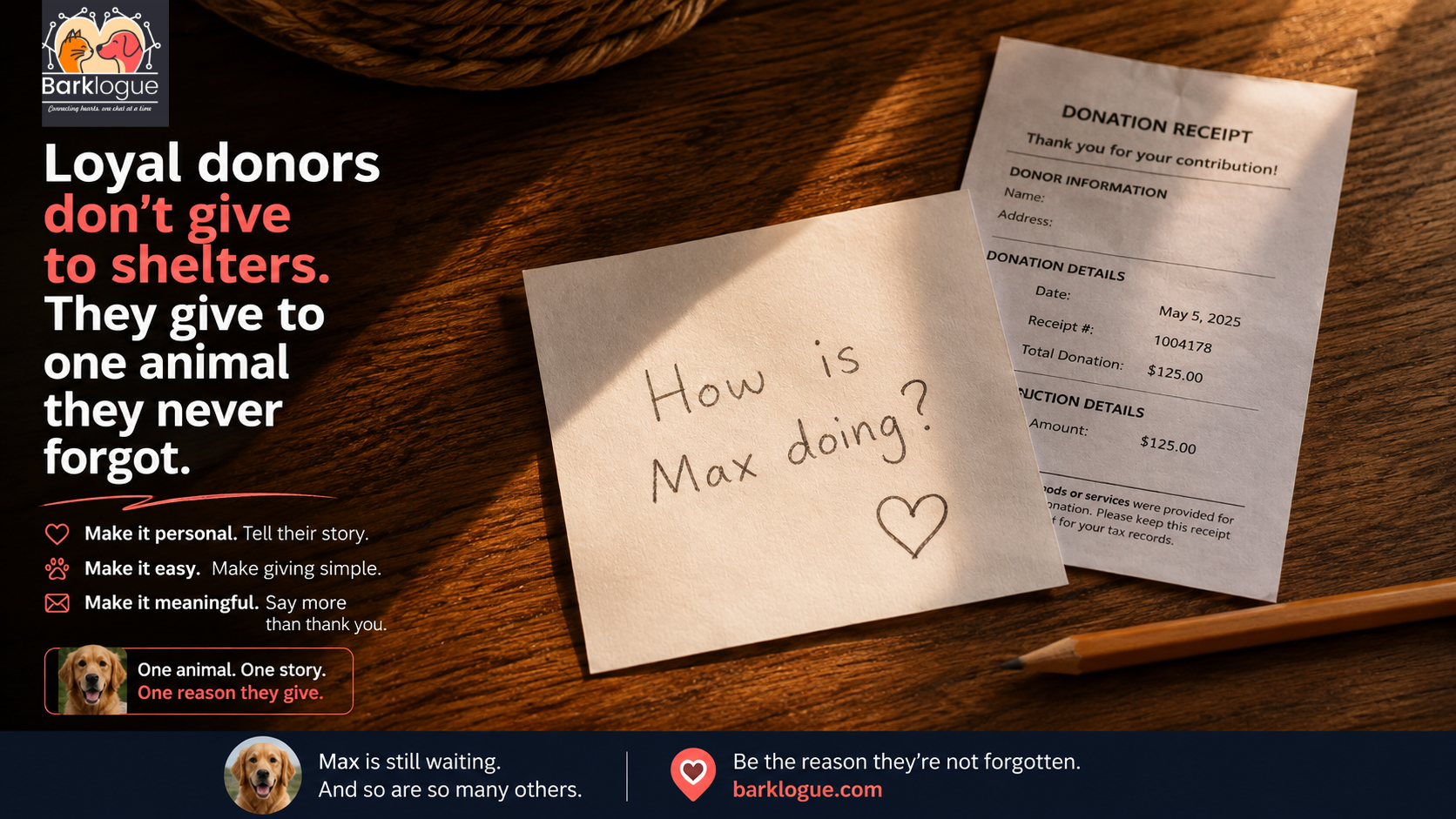
Donors leave because they stopped feeling connected. They gave once, received a generic thank-you, and never heard anything personal again. Over time the shelter became one of dozens of causes in their inbox asking for money with no specific reason to choose this one over the others.
The fix is not a better campaign. It is a better conversation.
The Connection Model
Research on recurring donors in animal welfare shows a consistent pattern.
The donors who give the most over time are not the ones who gave the largest single amount. They are the ones who at some point connected with a specific animal and were kept updated about that animal.
They are not donating to a shelter. They are following a story.
That distinction changes everything about how you communicate with them.
What to Do at Each Stage
After the first donation
Send a thank-you within 24 hours that names a specific animal their donation helped. Not a cause. Not a general outcome. One animal with a name and one detail about them.
End the email with one question: “Would you like us to update you when there is news about this animal?”
That single question separates donors who want a transaction from donors who want a relationship.
After they say yes
Send one short update within 30 days. Two to three sentences. What happened with the animal. Nothing more.
Do not ask for another donation in this message. The update is the entire point.
After 60 to 90 days
Send a second short update or a story about a different animal with a similar personality. By now they are engaged. They will often donate again without being asked.
If you do include a donation option, frame it around the specific animal, not a general appeal.
At the 6-month mark
Reach out with a genuine question. What made them choose your shelter in the first place. What kinds of animal stories resonate most with them. This does two things. It gives you useful information and it signals that you see them as a person, not a transaction.
The Emails That Retain Donors
The thank-you email
Subject: Your donation just helped someone specific
Body: Name the animal. One sentence about who they are. One sentence about what the donation made possible. One question asking if they want updates.
The update email
Subject: A quick update on [animal name]
Body: Two to three sentences. What happened. How the animal is doing. No ask.
The story email
Subject: I thought you might like to meet [animal name]
Body: A short profile of a new animal with a personality similar to the one they originally connected with. Soft donation option at the end.
What Not to Do
Do not send the same campaign email to every donor on your list. Donors who have already connected with a specific animal will disengage when they receive a generic mass appeal.
Do not wait until a fundraising drive to contact recurring donors. By then they have heard from you only when you need something.
Do not measure success by total amount raised per campaign. Measure it by donor retention rate over 12 months. That number tells you whether your communication is working.
One Thing to Start This Week
Look at your last 20 thank-you emails.
Count how many of them named a specific animal.
If the answer is zero, that is where to start.
One sentence about one animal in the thank-you email is the highest-return change most shelters can make to their donor communication today.
Created by BarkLogue. Helping shelters tell animal stories that raise more donations. barklogue.com