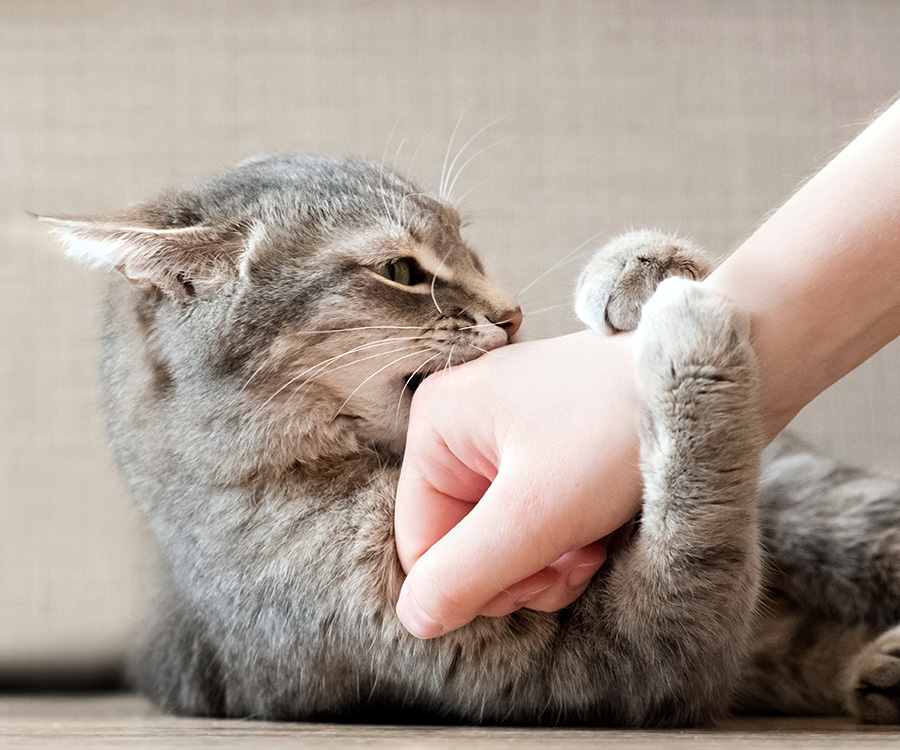
You’re petting your cat. They’re purring, curled up beside you, and completely relaxed.
Then, out of nowhere, they lean over and gently bite your hand.
Not hard enough to hurt. Not enough to leave a mark.
Just enough to make you stop and wonder:
Why does my cat bite me gently?
The good news is that gentle biting is usually not a sign of aggression. In most cases, it’s your cat’s way of communicating.
The meaning depends on what’s happening at that moment, your cat’s personality, and their body language.
Let’s look at what your cat may be trying to tell you.
The Short Answer: Why Does My Cat Bite Me Gently?
A gentle bite is usually a form of communication.
Your cat might be saying:
- “I love you.”
- “Pay attention to me.”
- “Let’s play.”
- “I’ve had enough petting.”
- “Please give me some space.”
The key is understanding the situation and watching your cat’s body language.
A soft bite during cuddle time means something very different from a bite that comes with flattened ears and a twitching tail.
Cat Love Bites: When Gentle Biting Is Actually Affection
One of the most common reasons cats gently bite their owners is affection.
These are often called cat love bites.
Cats groom family members by licking and lightly nibbling their fur. When your cat licks your hand and follows it with a gentle bite, they’re often treating you like part of their social group.
In other words, they’re including you in their version of family bonding.
Many cat owners are surprised to learn that a gentle nibble can actually be a compliment.
Signs It’s a Love Bite
Your cat is likely showing affection if they:
- Are purring while biting
- Have relaxed ears and whiskers
- Blink slowly at you
- Stay close after the bite
- Don’t break the skin
Love bites are usually brief, controlled, and harmless.
They’re your cat’s way of saying, “I trust you.”
Your Cat Wants Attention
Sometimes the answer to “why does my cat bite me gently?” is surprisingly simple.
They want your attention.
Cats quickly learn which behaviors get a response from their humans. If meowing doesn’t work, a gentle bite might.
You may notice this when:
- You’re working on your computer
- Watching TV
- Reading a book
- Talking on the phone
Your cat isn’t necessarily being naughty.
They’re simply finding a way to make sure you notice them.
A Common Example
You’re answering emails while your cat sits beside your keyboard.
First they rub against your arm.
Then they paw at your hand.
Then comes the gentle bite.
Mission accomplished. You looked at them.
Petting Aggression: When Your Cat Has Had Enough
This is one of the most misunderstood reasons cats bite.
Your cat may genuinely enjoy being petted. But every cat has a limit.
Sometimes a pleasant petting session turns into overstimulation.
When that happens, your cat may deliver a small warning bite.
They’re not trying to hurt you.
They’re saying, “Okay, that’s enough.”
Warning Signs Most Owners Miss
Before the bite happens, many cats show subtle clues:
- Tail swishing
- Ear flattening
- Skin twitching along the back
- Muscle tension
- Sudden head turns toward your hand
Most bites that seem random actually come after several warning signs.
Before and After
Before:
Your cat shows tail flicking and body tension, but the petting continues.
After:
You notice the signals and stop petting before your cat feels the need to nip.
A small adjustment like this can dramatically reduce biting.
Play Biting and Hunting Instincts
Cats are predators.
Even the most pampered indoor cat still carries powerful hunting instincts.
That’s why many cats gently bite during play.
Kittens are especially known for this behavior. They’re learning how to hunt, stalk, grab, and bite.
The problem starts when human hands become part of the game.
If your cat grows up chasing fingers and hands, they may think biting people is acceptable play behavior.
How to Redirect Play Biting
Instead of using your hands, offer:
- Wand toys
- Interactive toys
- Puzzle feeders
- Cat tunnels
- Scratching posts
- Climbing trees
These outlets allow your cat to express natural hunting behaviors without turning your fingers into prey.
Could Pain or Illness Be Causing the Biting?
Not all biting is behavioral.
Sometimes a cat bites because something hurts.
If your cat suddenly starts biting when they’ve never done it before, pay attention.
Pain often changes behavior long before obvious symptoms appear.
Health Issues That May Trigger Biting
Some common causes include:
- Dental disease
- Tooth pain
- Arthritis
- Injuries
- Skin allergies
- Ear infections
Imagine having a sore shoulder and someone repeatedly touching it.
You’d probably react too.
If the biting is new, frequent, or accompanied by other behavior changes, schedule a veterinary visit.
Gentle Biting vs Aggressive Biting
Not every bite means the same thing.
Knowing the difference can help you respond appropriately.
| Gentle Biting | Aggressive Biting |
|---|---|
| Relaxed body | Tense body |
| Soft nibble | Hard bite |
| Often accompanied by purring | Often accompanied by hissing |
| Doesn’t break skin | May break skin |
| Affection or communication | Fear, stress, or pain |
| Returns to normal behavior quickly | Remains defensive afterward |
If you’re ever unsure, focus on the body language surrounding the bite.
The bite itself is only part of the message.
How to Respond When Your Cat Bites You Gently
Your reaction matters.
Cats learn through associations. Responding calmly helps prevent the behavior from escalating.
What To Do
- Stay calm.
- Stop the interaction briefly.
- Slowly move your hand away.
- Redirect attention with a toy if appropriate.
- Reward calm behavior.
What Not To Do
- Don’t yell.
- Don’t hit your cat.
- Don’t push them away forcefully.
- Don’t jerk your hand back suddenly.
Quick reactions can trigger your cat’s chase instinct and make the situation worse.
How to Prevent Future Biting
Most gentle biting can be managed once you understand why it’s happening.
A few simple habits can help:
- Keep petting sessions short.
- Learn your cat’s warning signals.
- Schedule daily play sessions.
- Provide climbing and scratching opportunities.
- Rotate toys to prevent boredom.
- Respect your cat’s boundaries.
If you’re thinking your cat secretly dislikes you because they gently bite you, the opposite is usually true.
Most gentle bites are communication, not rejection.
When Should You Be Concerned?
A gentle bite is usually harmless.
However, it’s worth talking to your veterinarian if:
- Biting suddenly increases
- The bites become painful
- Your cat starts showing aggressive behavior
- You notice signs of illness
- The behavior appears completely out of character
Cats are excellent at hiding discomfort.
Behavior changes are often one of the first clues that something isn’t right.
What Your Cat Is Really Saying
Most cats don’t bite gently because they’re angry.
They’re communicating.
Sometimes it’s affection. Sometimes it’s play. Sometimes it’s a polite request to stop doing something.
The more you learn your cat’s body language, the easier these messages become to understand.
And once you start recognizing the difference between
- a love bite.
- a play bite.
- a warning nip.
You’ll build a stronger and more trusting relationship with your feline friend.
Frequently Asked Questions
Why does my cat bite me gently and then lick me?
This is usually affectionate grooming behavior. Your cat is treating you like a trusted family member and engaging in the same social bonding behaviors they use with other cats.
Are cat love bites normal?
Yes. Many cats show affection through gentle nibbles. These bites are usually controlled, don’t break the skin, and occur when a cat feels relaxed and comfortable.
Why does my cat gently bite me while purring?
Purring and gentle biting often occur together during affectionate moments. Your cat may be expressing excitement, comfort, or social bonding.
Should I let my cat gently bite my hand?
Occasional gentle nibbles are usually harmless. However, if the behavior becomes more intense or frequent, it’s best to redirect your cat toward toys.
Can kittens grow out of gentle biting?
Yes. With consistent redirection and proper play habits, most kittens learn bite inhibition and become gentler as they mature.
When should I worry about my cat biting me?
You should contact your veterinarian if biting suddenly increases, becomes aggressive, breaks the skin, or is accompanied by other behavioral changes.