How to Stop Losing the Donors You Already Have
By Herb Locke, Founder of BarkLogue
The Real Problem
Most shelters treat fundraising as a series of campaigns.
They build toward a campaign, run the campaign, collect donations, and then go quiet until the next one. The donors who gave sit in a database receiving nothing personal until another ask arrives months later.
By that point most of them have emotionally disconnected.
They have not left because they stopped caring about animals. They left because nobody gave them a reason to stay.
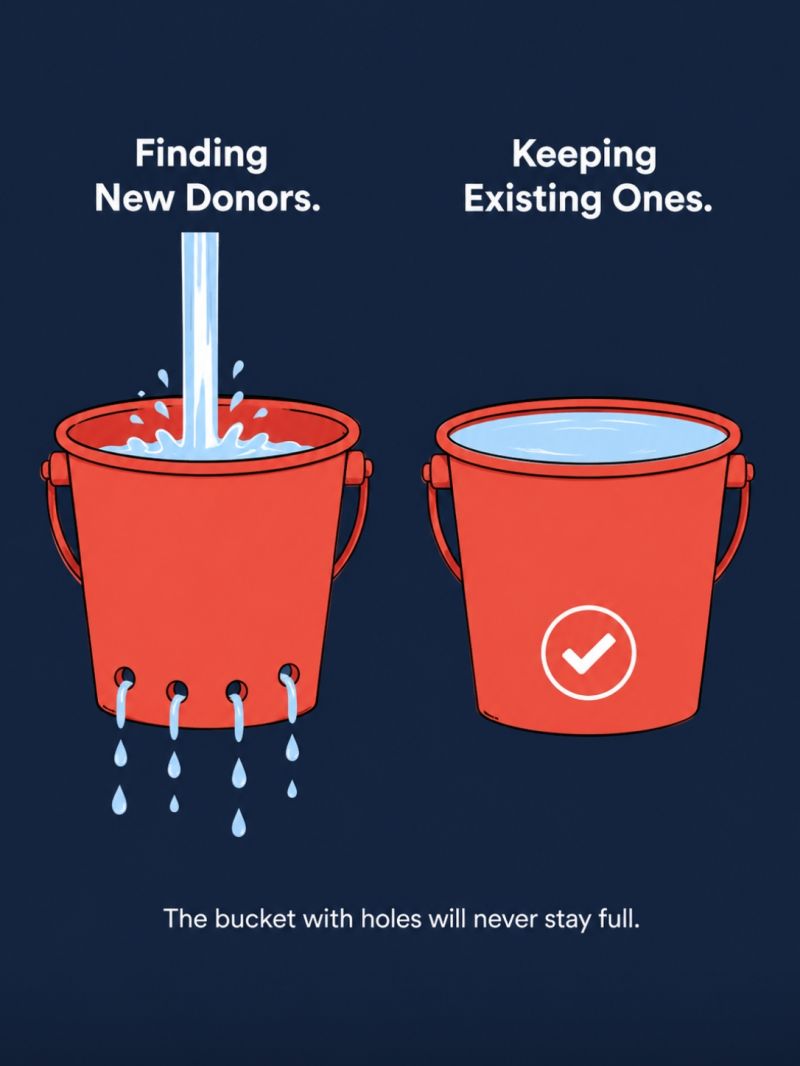
This is the leaky bucket. You pour new donors in from the top through campaigns and social posts while existing donors quietly walk out the bottom through neglect.
Fixing the bottom of the bucket is almost always more valuable than finding more donors to pour in from the top.
What Donors Actually Need Between Campaigns
Donors do not need to hear from you every week.
They need three things across the year.
They need to know their donation did something specific. They need to feel like they are part of an ongoing story rather than a completed transaction. And they need occasional reasons to give again that feel earned rather than scheduled.
That is it. Three things. None of them require a campaign.
The Engagement Calendar
This is a simple 12-month framework for staying connected with existing donors without burning them out or treating every touchpoint as a fundraising moment.
January: The Year in Review
Send a personal note summarizing what the shelter achieved last year. Name specific animals. Use real numbers if you have them, how many were adopted, how many came through the doors, what changed.
This is not a donation ask. It is a report back to people who invested in you.
March: A Story Update
Pick one animal from the previous year that donors heard about and share what happened next. If they were adopted, tell that story. If they are still with you, share something new.
One animal. A few paragraphs. No ask.
May: A New Story
Introduce a current animal to your donor list the same way you would introduce a person. Name, personality, a specific detail that makes them real.
End with a soft opt-in: would you like updates on this animal? Let donors choose to follow a story rather than being automatically enrolled in communications.
July: The Halfway Check-In
A brief personal note from the shelter director or founder. What has been hard this year. What has been good. What you are working on.
This is the most underused communication in shelter fundraising. Donors who feel like they know the people behind the shelter give more and stay longer than donors who only see polished campaign content.
Be honest. Be brief. Be human.
September: The Story Outcome
Follow up on the animal from May. Where are they now. What the adopter said. What the shelter learned.
If the animal is still waiting, say so honestly. A story that is still unresolved keeps donors more engaged than a tidy resolution, because they are still needed.
November: The Year-End Campaign
By this point your donors have received five personal communications that were not donation requests. They know a specific animal. They feel connected to the people running the shelter.
Now you ask.
The year-end ask from a shelter that has stayed in genuine contact all year converts at a dramatically higher rate than the same ask from a shelter that has been silent since January.
The Simple Scoring System
Not all donors need the same level of contact.
Divide your donor list into three groups.
Group 1: Given in the last 6 months These donors are warm. They get the full calendar above plus personal follow-up if they engage with any communication.
Group 2: Given 6 to 18 months ago These donors are cooling. They get a re-engagement message before they are added to the main calendar. One email, one specific animal, one question at the end. Donors who respond move to Group 1.
Group 3: Given more than 18 months ago These donors have likely disconnected but are not gone. Send them one honest message acknowledging the gap, sharing one story, and asking if they would like to stay connected. No guilt. No pressure. Some will come back simply because you asked directly.
What to Do This Week
Pull a list of every donor who gave in the last two years but has not given again.
Write one email. Name a specific animal. Tell a two-paragraph story. Ask if they would like to follow that animal’s journey.
Do not ask for money.
See how many reply.
The ones who do are not lapsed donors. They are people who still care and were waiting for something personal to respond to.
That is your list.
Created by BarkLogue. Helping shelters build the conversations that turn one-time donors into lifelong supporters. barklogue.com