A Complete Household Hazard Guide for Dog Owners and New Adopters
By Herb Locke, Founder of BarkLogue
Why This Guide Exists
Most dogs that are poisoned at home are poisoned by something their owner did not know was dangerous.
Not because the owner was careless. Because nobody told them.
This guide covers the most common household hazards for dogs, what to watch for if something goes wrong, and exactly what to do. Keep it somewhere easy to find, share it with anyone who has just adopted a dog, and read it before you assume something is safe.
Foods That Can Kill Your Dog
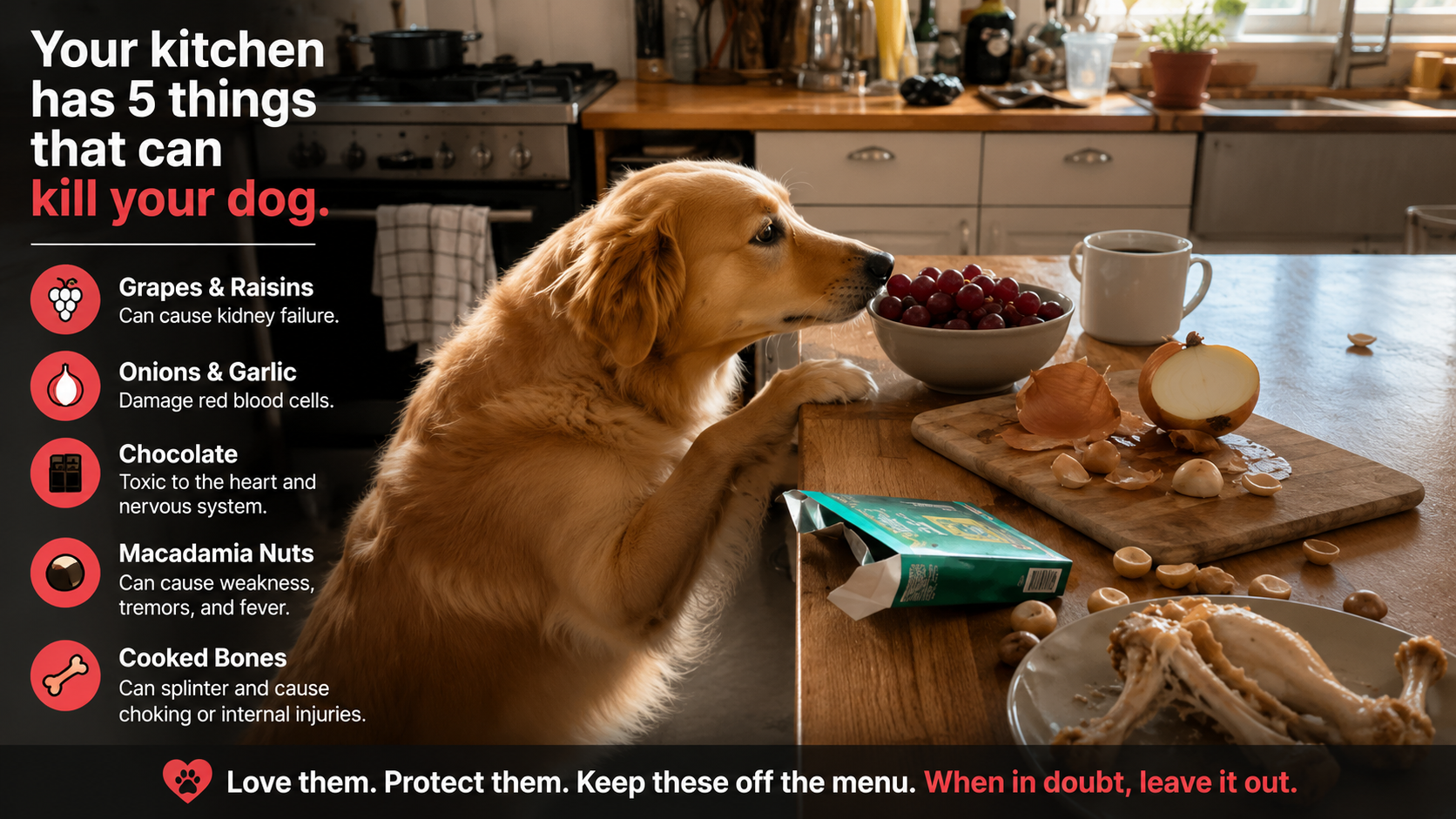
Grapes and Raisins
This one surprises most people because grapes seem harmless.
They are not. The exact toxic compound has not been identified, which means there is no established safe amount.
A small handful has caused kidney failure in healthy adult dogs. Some dogs have eaten grapes without visible effects. Others have died from a single serving.
The only safe approach is no grapes and no raisins ever. That includes fresh grapes, raisins, and foods that contain them such as trail mix, granola bars, cereals, oatmeal cookies, fruit cakes, and other baked goods.
Many owners remember to avoid fresh grapes but forget to check packaged foods.
Kidney failure can begin within 24 hours. Early signs include vomiting, lethargy, and loss of appetite. If your dog eats grapes or raisins in any form, contact your veterinarian immediately.
Xylitol
Xylitol is an artificial sweetener found in sugar-free gum, certain peanut butter brands, toothpaste, mouthwash, vitamins, and an increasing number of baked goods and snack products.
In dogs, it triggers a rapid and severe drop in blood sugar followed in some cases by liver failure. It acts fast. Symptoms can begin within 30 minutes of ingestion.
Before you give your dog any peanut butter or human snack product, read the ingredient list. If it says xylitol, erythritol, or any sugar alcohol, keep it away from your dog.
Onions and Garlic
Both onions and garlic destroy red blood cells in dogs, leading to anemia. This applies to every form. Raw, cooked, powdered, and dehydrated. Garlic is significantly more toxic per gram than onion.
The damage is cumulative. Small amounts over time can build up to a dangerous level. Watch for pale gums, weakness, reduced appetite, and orange or red-tinged urine.
This includes foods cooked with onion or garlic. Broth, sauces, and many prepared human meals contain enough to cause problems.
Chocolate
Most owners know chocolate is dangerous but underestimate how dangerous.
The toxic compounds are theobromine and caffeine. Dark chocolate and baking chocolate contain far higher concentrations than milk chocolate. White chocolate contains very little.
A small amount of dark chocolate can be fatal in a small dog. Symptoms include vomiting, diarrhea, increased thirst, tremors, and seizures. They can appear within six hours of ingestion.
Macadamia Nuts
Not typically fatal but serious. Macadamia nuts cause vomiting, tremors, high fever, and hind leg weakness within 12 hours. Most dogs recover with veterinary support but the experience is distressing and avoidable.
Cooked Bones
Raw bones are generally safe and often beneficial. Cooked bones are a different matter entirely.
Cooking changes the structure of the bone, making it brittle. When a dog chews a cooked bone it splinters into sharp fragments that can puncture the esophagus, stomach, or intestinal lining. Chicken, pork, and fish bones carry the highest risk.
If your dog has eaten a cooked bone and is gagging, drooling excessively, or showing signs of abdominal pain, call your vet immediately.
Common Household Products
Human Medications
Ibuprofen and acetaminophen are among the most common causes of accidental dog poisoning. A single regular-strength ibuprofen tablet can cause serious kidney damage in a medium-sized dog. Acetaminophen affects the liver and red blood cells.
Keep all medications in closed cabinets. Dogs can chew through blister packs and pill bottles.
Cleaning Products
Floor cleaners, bleach, toilet bowl tablets, laundry detergent pods, and drain cleaners are all dangerous. Detergent pods are particularly dangerous because dogs are attracted to their soft texture and bright colors.
Even products that seem mild can cause chemical burns in the mouth and stomach. After mopping floors with cleaning products, allow them to dry completely before letting your dog walk on the surface.
Plants
Several common household and garden plants are toxic to dogs.
Sago palm is one of the most dangerous. Even a small amount causes liver failure. Lilies, while far more dangerous to cats, can also affect dogs. Azaleas, rhododendrons, tulip bulbs, daffodils, and oleander are all toxic.
Before buying a new plant or cutting flowers for the house, check whether it is safe for dogs. The ASPCA maintains a full list at ASPCA Pet Care.
Rodent Bait and Insecticides
Rodent poison is designed to be palatable. Dogs find it appealing. If you use rodent bait anywhere in your home or garden, place it in areas completely inaccessible to your dog. Many insecticides are also toxic, particularly those containing organophosphates or pyrethrins in high concentrations.
Signs That Something Is Wrong
Contact your vet immediately if your dog shows any of these after potential exposure to a toxic substance.
- Vomiting more than once in a short period
- Diarrhea, especially with blood
- Excessive drooling or foaming at the mouth
- Pale, white, or bluish gums
- Tremors or seizures
- Collapse or sudden extreme weakness
- Labored or rapid breathing
- Swollen abdomen
- Loss of coordination
Do not wait for symptoms to worsen. Do not try to induce vomiting unless specifically instructed by a vet. Some substances cause additional damage coming back up.
What to Do If Your Dog Is Poisoned
Step 1. Stay calm. Your dog will pick up on your anxiety.
Step 2. Call your vet or an emergency animal clinic immediately. Have the product or substance ready to describe, including the ingredient list if available.
Step 3. If you cannot reach your vet, contact the ASPCA Animal Poison Control Center at 888-426-4435. They are available 24 hours a day. A consultation fee applies but the service is worth it.
Step 4. Do not give your dog milk, water, or food unless instructed by a vet. Do not induce vomiting without being told to.
Step 5. If your dog is having a seizure or has lost consciousness, go directly to an emergency clinic without calling first.
For New Adopters
Rescue dogs are curious about their new environment and may investigate things a settled dog would ignore.
In the first few weeks, keep cleaning products stored out of reach, check your garden for toxic plants, and be especially careful about leaving food on counters. A dog that has never had access to a kitchen before may not yet understand what is and is not for them.
Sharing this guide with everyone in the household before the dog arrives is one of the most useful things you can do.
This guide was created by BarkLogue, the AI platform that gives shelter animals a voice and helps shelters raise more donations. Visit barklogue.com or book a call at calendly.com/blang-barklogue/30min