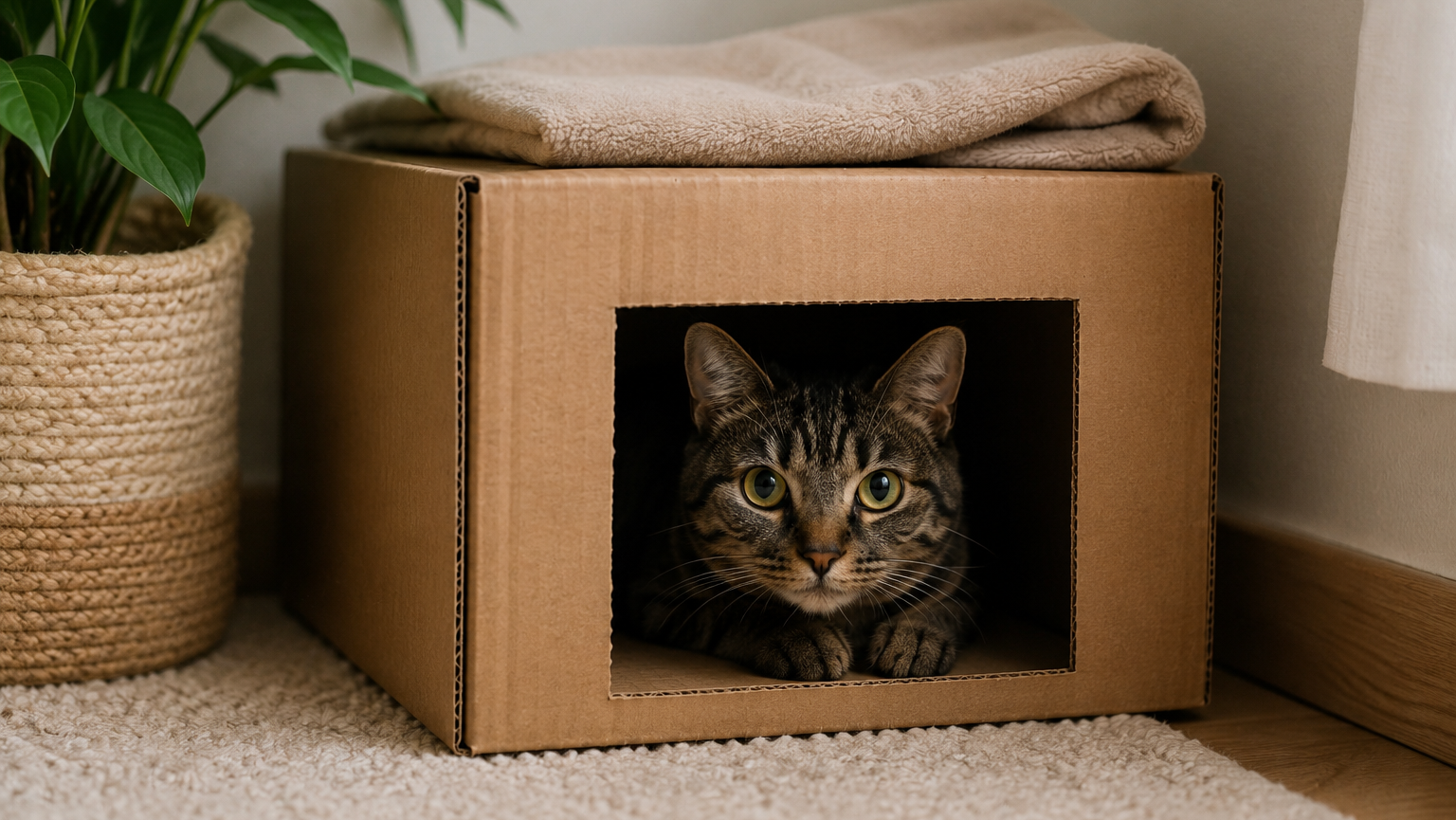
Your cat seems different lately.
Maybe they’re hiding more, acting grumpy, or avoiding interaction.
Cats are experts at hiding stress.
By the time the signs become obvious, stress has often been building for a while.
This guide covers the common and subtle signs to watch for.
Why Cats Hide Stress So Well
In the wild, showing weakness could make a cat a target. That survival instinct remains today, which is why cats often hide stress, fear, and discomfort.
The good news is that once you know what to look for, the signs are easier to spot.
⚠️ Fear Removal: If you’re only noticing it now, that’s okay. What matters is recognizing it and taking action.
The Signs – Obvious and Subtle
Obvious Signs
1. Hiding More Than Usual
Most cats hide occasionally. Stress-related hiding usually means spending much more time in secluded places or avoiding people they normally trust.
2. Litter Box Problems
Stress can cause cats to pee, poop, or spray outside the litter box.
Because these signs can also indicate illness, rule out medical issues first.
3. Overgrooming or Pulling Fur
Some cats lick excessively when stressed. Watch for bald spots, irritated skin, or repeated grooming of the same area.
4. Sudden Aggression
A normally friendly cat that starts hissing, swatting, or biting may be stressed, frightened, or in pain.
5. Appetite Changes
Stress can make cats eat less or more than usual.
If your cat refuses food for over 24 hours, contact your veterinarian.
Subtle Signs (The Ones Most Owners Miss)
These often appear before the more obvious signs and are easy to overlook.
6. Hunched Posture
A stressed cat may sit with a rounded back, tucked paws, and a lowered head instead of appearing fully relaxed.
7. Hypervigilance
Your cat may seem constantly alert, staring at doors, windows, or other areas while struggling to settle down.
8. More Vocalization Than Usual
Extra meowing, yowling, or nighttime vocalizing can sometimes be linked to stress.
9. Withdrawal Without Obvious Reason
A cat that normally seeks attention may suddenly become distant, less playful, or less interested in interaction.
Common Stress Triggers
Cats thrive on routine, so even small changes can be stressful.
Common triggers include:
- A new pet or person
- Moving house
- Changes in routine
- Loud noises
- Outdoor cats visible through windows
- Conflict with another pet
Could You Be the Cause?
Cats are very sensitive to changes in their environment and human behavior.
Common owner habits that can increase stress include:
- Picking them up when they don’t want to be held
- Overreacting to anxious behavior
- Keeping an inconsistent routine
This isn’t about blame. The positive side is that these are things you can easily change.
Normal Stress vs. Time to Call the Vet
Mild stress often improves once the trigger is removed and your cat continues eating, drinking, and using the litter box normally.
Call your vet if:
- Signs last longer than 1–2 weeks
- Your cat develops bald patches or skin irritation
- They stop eating for 24 hours or more
- Physical symptoms appear
- You’re unsure what’s causing the behavior
Stress and illness can look very similar, so it’s always better to be cautious.
Simple Things That Actually Help
Focus on simple, proven steps:
- Keep a consistent routine
- Provide hiding spots and vertical spaces
- Reduce stress triggers
- Try a pheromone diffuser
- Play with your cat daily
- Never punish stressed behavior
Before: Your cat is acting differently and you do not know if it is stress, illness, or just a phase.
After: You know the signs, you know what is normal, and you know exactly when to act.
Common Questions People Ask
How do I know if my cat is stressed or just tired?
A tired cat relaxes and returns to normal after resting. A stressed cat often remains withdrawn, tense, or unusually distant.
Can stress make my cat physically sick?
Yes. Long-term stress can contribute to digestive issues, urinary problems, skin conditions, and other health concerns.
How long does cat stress usually last?
Many cats improve within days once the cause is addressed. Ongoing stress can last much longer if the trigger remains.
💡 Use the quick checker below to see where your cat might land right now.
What Should You Do Next?
Think about what has changed recently in your cat’s environment.
A new routine, different furniture, a new pet, or even a cat outside the window can sometimes be enough to trigger stress.
Finding the cause is often the fastest way to help your cat feel safe again.
For more guides on understanding your cat’s behavior, visit BarkLogue. And if your cat has been following you around more than usual lately, that can sometimes be a stress signal too. Our post on why cats follow their owners everywhere explains what to look for.
Frequently Asked Questions
Q: Can indoor cats get stressed?
Yes. Indoor cats can become stressed by boredom, lack of stimulation, or changes in their environment.
Q: Does my cat know when I am stressed?
Many cats pick up on changes in your behavior, routine, and mood, which can affect how they feel.
Q: How do I help a stressed cat in a multi-cat household?
Give each cat separate resources, including food, water, litter boxes, and resting spaces.
Q: Can stress cause a cat to stop using the litter box?
Yes, but medical issues can cause the same behavior. Always rule out health problems first.
Q: Is it normal for cats to be stressed after moving?
Yes. Moving is a major change, and many cats need a few weeks to adjust.
Q: When should I consider anxiety medication for my cat?
If stress is severe, ongoing, or affecting your cat’s health, speak with your veterinarian about available options.