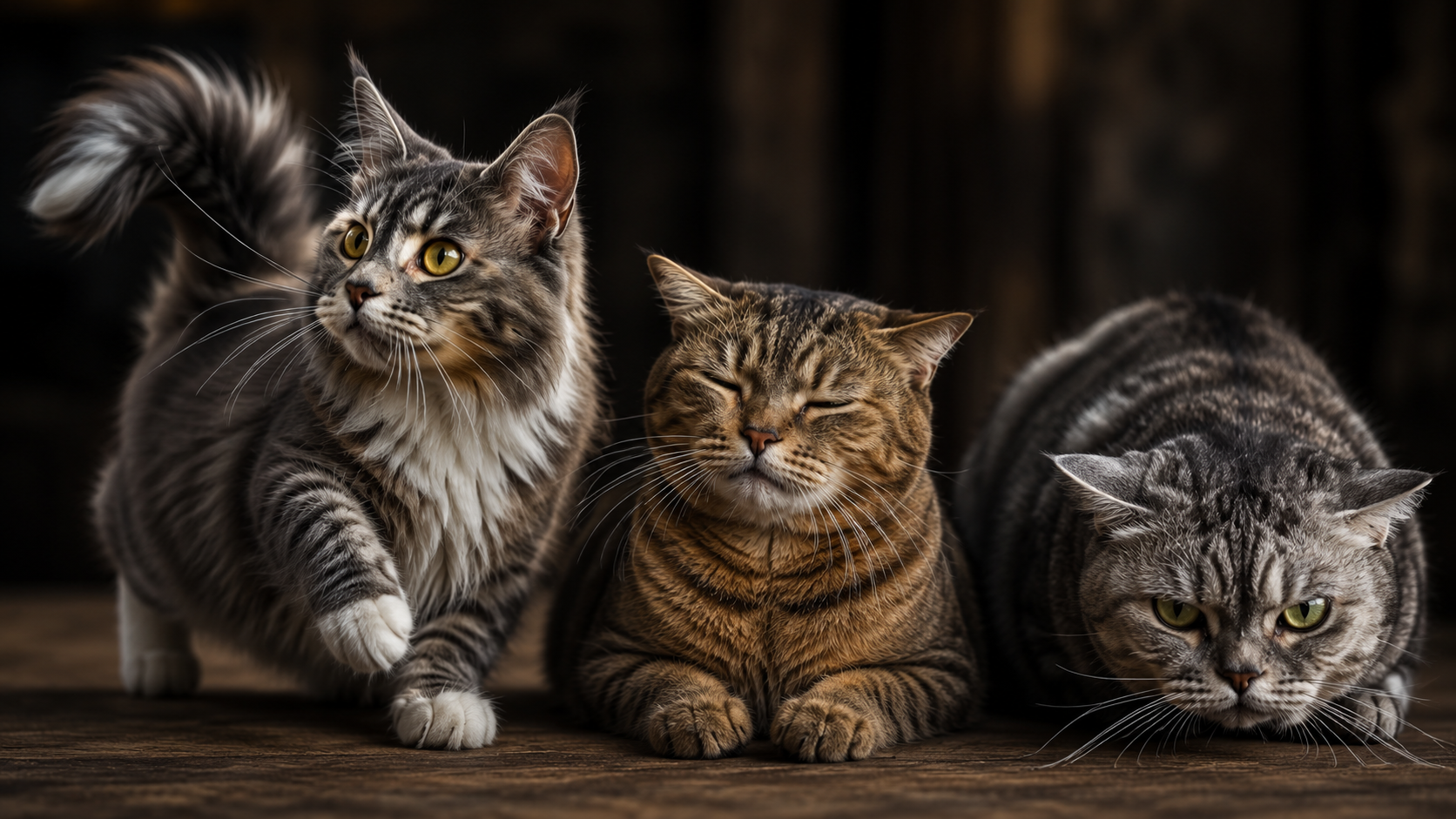
Many cat owners wish their cat could talk.
The funny thing is, your cat is already communicating with you all day long.
The challenge isn’t that cats are silent.
It’s that most of us haven’t learned their language.
- A flicking tail.
- A slow blink.
- A pair of flattened ears.
Every movement means something.
This cat body language guide will help you understand what your cat may be trying to tell you.
Why Cat Body Language Matters
Cats don’t communicate the same way people do.
And they don’t communicate like dogs either.
That’s why misunderstandings happen.
A cat that looks relaxed might actually be uncomfortable.
A cat that seems friendly might need space.
Learning basic body language helps you:
- Build trust
- Reduce stress
- Understand your cat’s needs
- Strengthen your relationship
The better you understand your cat, the easier life becomes for both of you.
The Tail Tells a Story
A cat’s tail is one of the easiest body language signals to read.
Tail Up
A tail held high usually means confidence and comfort.
Many cats greet people they trust this way.
Puffed Tail
A puffed-up tail often signals fear or alarm.
Your cat is trying to appear larger and more intimidating.
Swishing Tail
A slow swish can indicate focus.
A fast, forceful swish often means irritation or overstimulation.
Tail Wrapped Around You
This is often a friendly gesture.
Think of it as a feline version of a hug.
What Cat Ears Can Tell You
Ears are another important part of this cat body language guide.
Ears Forward
A cat with forward-facing ears is usually relaxed, curious, and engaged.
Ears Turned Sideways
This can indicate uncertainty or mild discomfort.
Your cat is paying close attention to what’s happening around them.
Flattened Ears
Flattened ears are usually a warning sign.
Your cat may feel scared, threatened, or defensive.
If you see this, it’s often best to give them space.
Watch the Eyes
Cats communicate a lot through their eyes.
Slow Blinking
This is one of the friendliest signals a cat can give.
A slow blink often means trust and affection.
Many cat owners return the slow blink as a way of saying, “I trust you too.”
Dilated Pupils
Large pupils can mean excitement, fear, surprise, or playful energy.
Context matters.
Narrow Pupils
Small pupils can indicate focus, alertness, or irritation.
Look at the rest of the body to understand the full message.
Reading the Whole Cat
One of the biggest mistakes people make is focusing on a single signal.
Body language works best when viewed as a complete picture.
For example:
- Tail up + relaxed posture = comfortable
- Flattened ears + tense body = stressed
- Slow blink + relaxed posture = trust
The more signals you observe together, the clearer the message becomes.
Common Signs People Misunderstand
Some cat behaviors are easy to misread.
Belly Exposure
When a cat rolls onto its back, it doesn’t always mean “please rub my belly.”
Sometimes it simply means they feel safe enough to relax.
Purring
Most people associate purring with happiness.
Often that’s true.
But cats can also purr when they’re nervous, stressed, or seeking comfort.
Tail Flicking
Not every tail flick means your cat wants to play.
In some situations, it can mean your cat is becoming annoyed.
What I Learned From Shelter Cats
One thing shelter cats taught me is that every cat communicates a little differently.
Some cats are incredibly expressive.
Others are more subtle.
But almost all of them give signals if you’re willing to pay attention.
The volunteers who connect best with cats aren’t necessarily experts.
They’re observers, They notice the small things.
The ear movement, The tail position, The slow blink.
And over time, trust grows.
Common Questions
What does a cat’s tail position mean?
Tail position can communicate confidence, fear, curiosity, affection, or irritation depending on how it’s held.
Why do cats slow blink?
Slow blinking is often considered a sign of trust, comfort, and affection.
Why does my cat flatten its ears?
Flattened ears usually indicate fear, stress, discomfort, or defensive behavior.
What does it mean when a cat exposes its belly?
It often means the cat feels safe, but it isn’t always an invitation for belly rubs.
Can cats communicate emotions through body language?
Yes. Cats regularly communicate feelings such as trust, curiosity, fear, stress, excitement, and contentment through body language.
How can I better understand my cat?
Observe your cat’s tail, ears, eyes, posture, and behavior together rather than relying on a single signal.
What to Do Next
Spend five minutes simply watching your cat today.
No toys.
No distractions.
Just observe.
- Notice the tail.
- Notice the ears.
- Notice the eyes.
You might be surprised by how much your cat has been saying all along.
Because the secret to understanding cats isn’t teaching them our language.
It’s learning theirs.