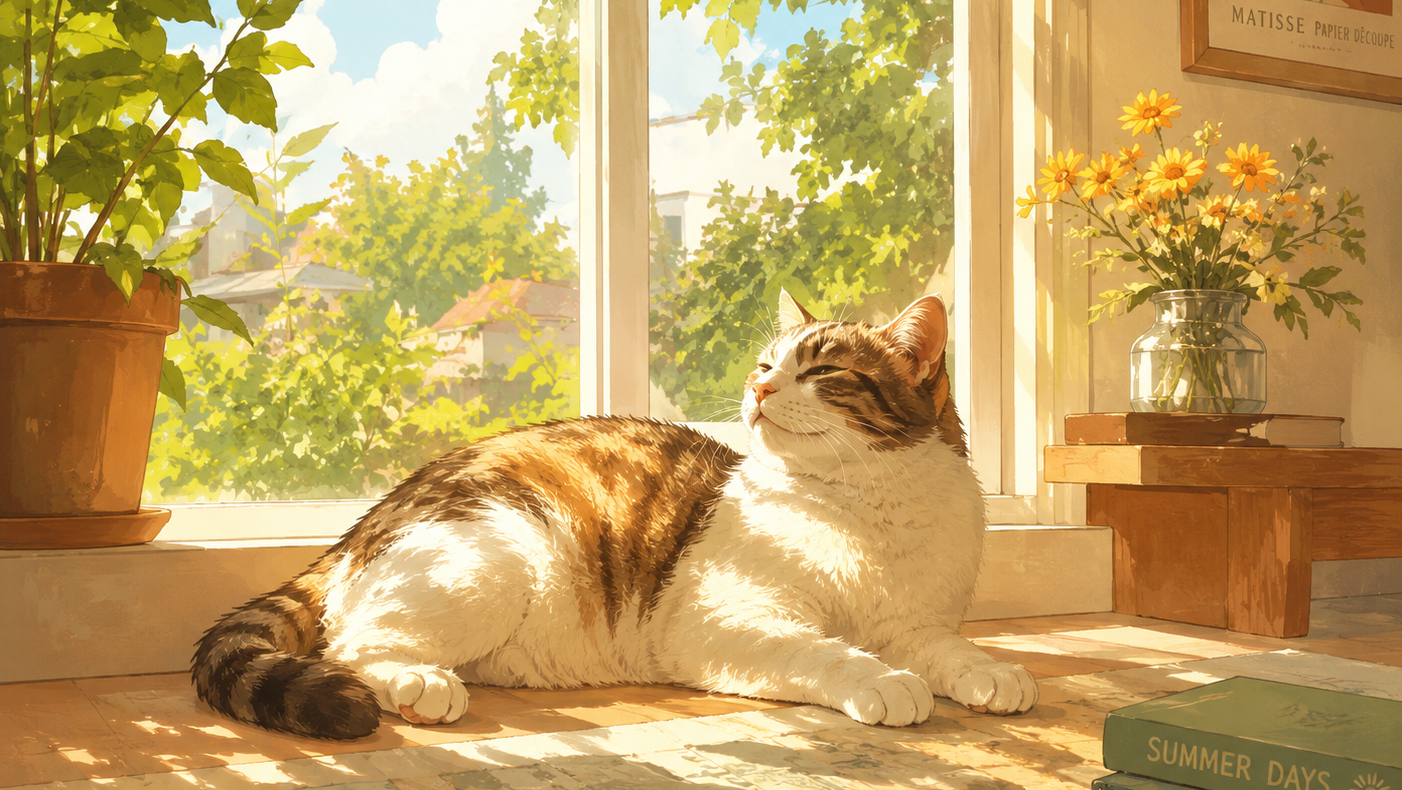
Last summer, I noticed something strange.
While everyone in the house was hiding from the heat, our cat was stretched out in a patch of sunlight near the window, like it was the perfect place to be.
It made me wonder whether cats experience summer the same way we do.
The answer is no.
Cats are incredibly good at finding comfortable spots and conserving energy,
but that doesn’t mean they’re immune to heat.
When temperatures climb, even healthy indoor cats can become dehydrated, overheated, or dangerously stressed by the heat.
That’s why keeping cats cool in summer isn’t just about comfort. It’s about protecting their health.
Why Summer Heat Can Be Dangerous for Cats
Cats handle heat differently from humans.
People cool themselves primarily through sweating. Cats don’t have that luxury.
They only sweat through small glands in their paw pads, which means they rely on other methods to regulate body temperature.
Most cats cope by:
- Resting more often
- Seeking shade
- Grooming themselves
- Spreading out on cool surfaces
But when temperatures rise too high, these natural cooling methods may not be enough.
Heat exhaustion and heatstroke can develop quickly, especially during heat waves or in poorly ventilated homes.
And yes, indoor cats can overheat too.
Signs Your Cat Is Too Hot
Cats are masters at hiding discomfort.
That’s why it’s important to recognize the early warning signs before a minor problem becomes an emergency.
Common Signs of Overheating
Watch for:
- Panting
- Drooling
- Rapid breathing
- Lethargy
- Restlessness
- Excessive grooming
- Seeking cool surfaces
Unlike dogs, cats rarely pant under normal circumstances.
If your cat is panting, they’re already struggling to cool down.
Signs of Heatstroke
Heatstroke is a medical emergency.
Seek veterinary care immediately if you notice:
- Vomiting
- Weakness
- Stumbling
- Confusion
- Collapse
- Seizures
Keep Fresh Water Available Everywhere
One of the simplest ways of keeping cats cool in summer is encouraging hydration.
Unfortunately, many cats don’t naturally drink enough water.
That’s why a single water bowl in the kitchen often isn’t enough.
Easy Ways to Encourage Drinking
Try these simple changes:
- Place water bowls in multiple rooms
- Refresh water at least twice daily
- Use wide, shallow bowls
- Consider a pet water fountain
- Add wet food to their diet
- Drop in a few ice cubes occasionally
Many cats are attracted to moving water, which is why fountains can dramatically increase water intake.
Create Cool Resting Spots Around Your Home
Cats naturally search for comfortable places to rest.
During summer, help them out by creating several cool zones throughout your home.
Tile floors, shaded corners, and rooms with good airflow often become favorite spots.
Before and After
Before:
One warm cat bed positioned beside a sunny window.
After:
Several cool resting options throughout the house, including shaded areas and cooler floor surfaces.
Small changes can make a big difference.
You can also try:
- Cooling mats
- Raised pet beds
- Shaded cat tents
- Areas near fans or air conditioning
Giving your cat choices allows them to regulate their own comfort.
Adjust Playtime During Hot Weather
Cats still need exercise during summer.
The timing just matters more.
Running, jumping, and chasing toys increases body temperature. During the hottest part of the day, strenuous activity may leave your cat uncomfortable.
The Best Times for Play
Most cats are more comfortable exercising:
- Early morning
- Late evening
- After sunset
Interactive toys, puzzle feeders, and indoor enrichment activities can help burn energy without exposing your cat to excessive heat.
Grooming Can Help Your Cat Stay Cooler
A well-groomed coat helps regulate temperature more effectively.
Regular brushing removes loose fur and prevents mats that trap heat against the skin.
This is especially important for long-haired breeds.
Summer Grooming Tips
- Brush regularly
- Remove loose undercoat
- Check for mats
- Monitor skin health
Many owners assume shaving their cat is the best solution.
Usually, it isn’t.
A cat’s coat provides insulation from both cold and heat. Unless your veterinarian recommends it, shaving can actually increase the risk of overheating and sunburn.
Special Care for Senior Cats, Kittens, and Flat-Faced Breeds
Some cats struggle more with heat than others.
These cats need extra attention during summer.
Higher-Risk Cats Include
- Kittens
- Senior cats
- Overweight cats
- Cats with heart conditions
- Persian cats
- Himalayan cats
- Other flat-faced breeds
Flat-faced cats often have more difficulty regulating airflow, which makes hot weather especially challenging.
If your cat falls into one of these categories, monitor them more closely during periods of extreme heat.
Can Cats Get Sunburned?
Surprisingly, yes.
Cats with light-colored fur, white fur, or thin coats can develop sunburn after prolonged exposure to direct sunlight.
The ears, nose, and eyelids are particularly vulnerable.
How to Reduce Sunburn Risk
- Provide shaded resting areas
- Limit prolonged sun exposure
- Close curtains during peak sunlight hours
- Use veterinarian-approved sun protection if recommended
Sunburn isn’t just uncomfortable. Repeated damage can increase the risk of skin problems later in life.
What To Do If Your Cat Overheats
If you suspect your cat is overheating, act quickly.
First Aid Steps
- Move your cat to a cooler location.
- Offer fresh drinking water.
- Apply cool, damp towels to their paws and body.
- Increase airflow with a fan.
- Contact your veterinarian immediately.
Avoid ice-cold water.
Cooling your cat too rapidly can sometimes create additional complications.
The goal is gradual cooling while seeking professional advice.
How to Prevent Heat Stress All Summer Long
Most heat-related problems are preventable.
A few simple habits can significantly reduce the risk.
If you’re thinking your indoor cat is automatically safe from summer heat, think again.
Warm rooms, poor airflow, and direct sunlight can make indoor environments surprisingly uncomfortable.
Focus on these basics:
- Fresh water every day
- Good ventilation
- Access to shade
- Regular grooming
- Appropriate exercise times
- Monitoring for signs of overheating
Consistency matters more than expensive products.
Keeping Cats Cool in Summer Starts With Small Changes
Most cats won’t tell you when they’re feeling too hot.
They’ll simply try to cope quietly.
That’s why keeping cats cool in summer comes down to observation. Watch their behavior, provide plenty of water, create cool resting areas, and adjust routines when temperatures climb.
The good news is that preventing heat stress is usually simple.
A few thoughtful changes around the house can help your cat stay comfortable, healthy, and safe all season long.
Frequently Asked Questions
How hot is too hot for cats?
Most cats begin experiencing discomfort when temperatures consistently rise above 85°F (29°C), especially if humidity is high and airflow is limited.
Do cats need fans in summer?
Fans can help improve airflow and comfort, although they don’t cool cats as effectively as they cool humans. They work best alongside shade and hydration.
Can cats get heatstroke indoors?
Yes. Poor ventilation, direct sunlight, and high indoor temperatures can all contribute to heatstroke, even in indoor-only cats.
Is it safe to put ice cubes in my cat’s water?
Yes. Most cats can safely drink water with ice cubes. Some cats even find it more appealing during hot weather.
Should I shave my cat during the summer?
In most cases, no. A cat’s coat helps regulate body temperature and provides protection from sunlight. Consult your veterinarian before shaving.
How can I tell if my cat is dehydrated?
Common signs include lethargy, dry gums, reduced appetite, and decreased skin elasticity. If you suspect dehydration, contact your veterinarian.