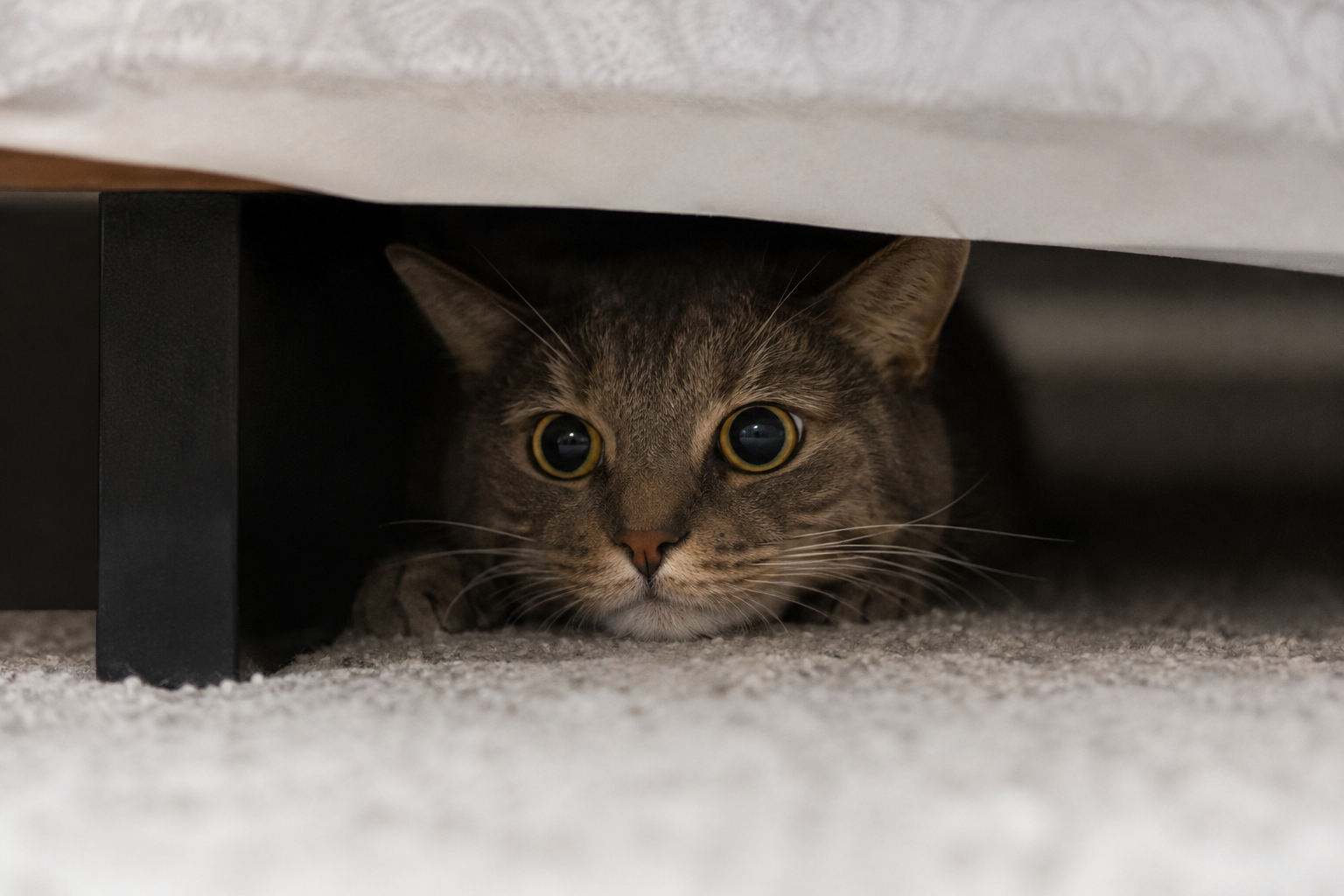
You hear a loud noise.
A visitor walks through the door or maybe you’ve just brought a new cat home.
Suddenly, your cat disappears.
- Under the bed.
- Behind the couch.
- Inside the closet.
- You want to help.
But every time you approach, they seem even more frightened.
If you’re wondering how to calm a scared cat, the answer is often simpler than people expect.
And it usually starts with giving your cat something they need most.
Control.
Why Cats Get Scared
Cats are natural survivors.
In the wild, caution keeps them safe.
When something feels unfamiliar or threatening, their first instinct is often to hide.
That’s not bad behavior.
It’s survival behavior.
Common triggers include:
- Moving to a new home
- Loud noises
- Visitors
- New pets
- Vet visits
- Changes in routine
What feels minor to us can feel overwhelming to a cat.
Signs Your Cat Is Frightened
Some signs are obvious.
Others are easy to miss.
Watch for:
- Hiding
- Flattened ears
- Dilated pupils
- Low body posture
- Trembling
- Refusing food
- Avoiding interaction
A scared cat may also become unusually quiet.
Or unusually vocal.
Every cat responds differently.
The Biggest Mistake People Make
Most people try to help immediately.
And that’s completely understandable.
The problem is that frightened cats often see unwanted attention as additional pressure.
Common mistakes include:
- Pulling a cat out of hiding
- Constantly checking on them
- Trying to force cuddles
- Encouraging interaction before they’re ready
Imagine being scared and having someone repeatedly push you into a social situation.
That’s often how it feels to a cat.
Patience usually works better than persuasion.
How to Calm a Scared Cat
The goal isn’t to make fear disappear instantly.
The goal is to help your cat feel safe enough for fear to fade naturally.
Give Them Space
A hiding cat is often trying to feel secure.
Let them have that space.
Create a Safe Area
Provide access to quiet places where your cat can retreat.
Boxes, covered beds, and secluded corners often help.
Speak Softly
Your tone matters.
Calm, predictable voices are less intimidating than excited ones.
Keep Routines Consistent
Feed meals at the usual time.
Keep daily routines predictable.
Consistency helps frightened cats feel more secure.
Let Them Approach You
This is one of the most effective strategies.
Instead of moving toward your cat, allow your cat to move toward you.
Trust grows faster when cats feel in control.
Reading Progress the Right Way
People often expect dramatic changes.
But confidence usually returns in small steps.
Signs of progress might include:
- Watching you from a distance
- Coming out when the room is quiet
- Accepting treats
- Exploring at night
- Sitting closer than before
These may seem minor.
To a frightened cat, they’re huge victories.
Progress doesn’t happen all at once.
What I Learned From Shelter Cats
One thing shelter cats taught me is that fear and trust often exist side by side.
A cat may want connection.
But fear gets there first.
The volunteers who build trust fastest aren’t usually the ones who interact the most.
They’re the ones who respect boundaries.
- They sit quietly.
- They wait.
- They let the cat decide.
Over time, the cat learns something important.
Nothing bad happens here.
That’s when trust begins.
When to Seek Extra Help
Most frightened cats improve with time and patience.
But sometimes additional support is needed.
Contact your veterinarian if your cat:
- Refuses food for an extended period
- Shows signs of illness
- Becomes aggressive due to fear
- Remains highly stressed for weeks
- Experiences sudden behavior changes
Fear can sometimes be linked to underlying medical issues.
Common Questions
How long does it take a scared cat to calm down?
It depends on the cat and the situation. Some recover within hours. Others may need days or weeks to feel fully comfortable.
Should I comfort a scared cat?
Yes, but gently. Stay calm, give them space, and avoid forcing interaction.
Why is my cat hiding and not eating?
Fear, stress, illness, or environmental changes can all affect appetite. Monitor closely and contact your veterinarian if the behavior continues.
Can a scared cat become aggressive?
Yes. Fear is one of the most common causes of defensive aggression in cats.
What helps a newly adopted cat feel safe?
A quiet room, consistent routine, safe hiding spots, and patience are often the best starting points.
When should I call a veterinarian?
If your cat stops eating, appears ill, or remains extremely fearful for an extended period, seek professional advice.
What to Do Next
If your cat is scared right now, resist the urge to fix everything immediately.
Slow down.
Lower the pressure.
Create safety.
Then let your cat set the pace.
Because learning how to calm a scared cat isn’t really about convincing them that everything is okay.
It’s about giving them enough time and space to discover that for themselves.