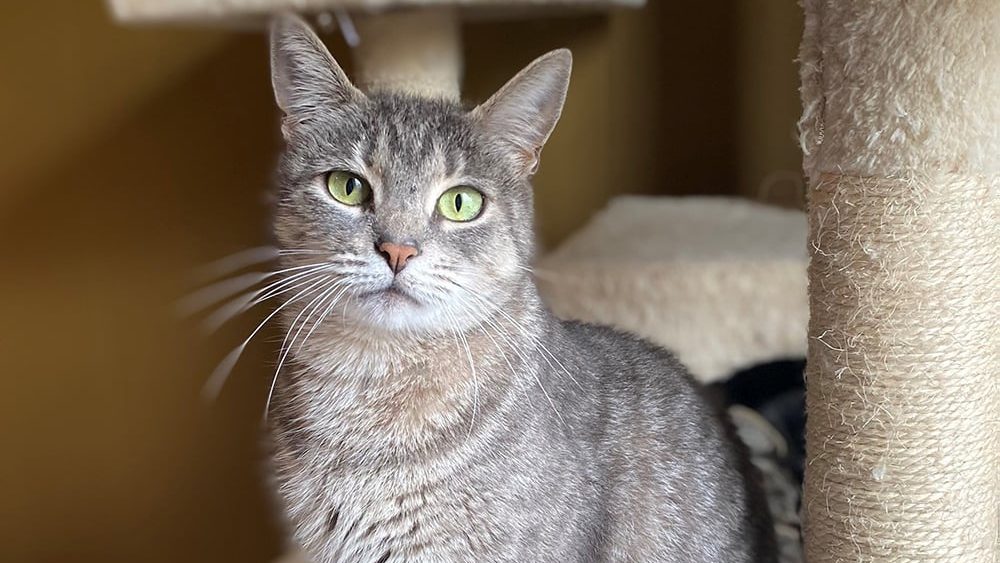
Wren was a 3-year-old grey tabby. She purred through her entire shelter intake.
Staff noted it in her file:
- very calm
- friendly
- purrs constantly
She was adopted in four days. The new owner brought her home.
Wren hid behind the dryer for two weeks and barely ate.
She wasn’t calm at intake. She was terrified.
The purr was the only tool she had.
Why do cats purr? Most people assume the answer is simple. It isn’t.
A Purr Is Not a Smile
Here’s the mistake most people make.
They hear a purr and think: happy cat. Green light. Everything is fine.
But a purr is not a smile. It’s communication.
like any communication, what it means depends entirely on context.
Same sound. Completely different story.
Why Do Cats Purr? Five Real Reasons
Contentment. Yes, this one is real. A cat kneading a blanket, slow blinking, loose and relaxed. That purr means exactly what you think it does.
Self-soothing. A cat in a new home, at the vet, or in a shelter kennel will often purr to calm themselves down.
It’s the feline version of someone humming when they’re nervous.
The sound is the same. The feeling is not.
Pain or illness. Cats purr when they’re hurt. They purr when they’re sick.
NC State University’s College of Veterinary Medicine notes that purring can occur just prior to sleep or when a cat is in pain – including, in some cases, after serious injury.
A purring cat is not always a comfortable cat.
Solicitation. This is the “feed me” purr.
Researchers have found that cats embed a high-frequency cry inside their purr when they want food or attention. It sounds more urgent.
Harder to ignore. Most cat owners know it without knowing why.
Healing. This one surprised me.
A cat’s purr vibrates at 25 to 50 Hz. Gary Weitzman, a veterinarian and CEO of the San Diego Humane Society.
speaking on BBC Future, noted that bone responds to vibrations in the 25 to 50 Hz range and soft tissues to around 100 Hz.
The theory is that purring helps cats keep bones and tissue in condition while they rest.
It may also explain why injured cats purr – the vibration is doing something useful.
The Purr That Gets Misread Most
Back to Wren.
At intake, she purred the whole time. Hands on her. New smells.
Loud kennel sounds. A strange cage. She purred through all of it.
The staff read that as calm. Understandable.
But here’s the before and after.
Before: “Wren. Female, 3 years old.
Grey tabby. Very calm, friendly, purrs constantly. Great for families.”
After: Two weeks behind a dryer. Barely eating.
A new owner who thought she’d done something wrong.
Same cat. The purr meant something the intake note never captured.
And that note shaped everything – who adopted Wren, what they expected, how they set up her space.
Wren was self-soothing at intake. The purr wasn’t telling staff she was fine.
It was telling them she was doing everything she could just to hold it together.
How to Read What Your Cat’s Purr Is Saying
The sound alone won’t tell you much. The body will.
Relaxed purr: Loose posture, slow blink, kneading, eyes half-closed. This cat is content.
Stressed purr: Tense body, wide eyes, flat ears, still tail. This cat is coping.
Pain purr: Purring in unusual spots, not eating, not moving normally, not responding.
This one warrants a same-day call to the vet.
Solicitation purr: Louder than usual, won’t stop, often comes with direct eye contact and circling your legs.
This cat wants something specific and is not going to let it go.
The purr is the same sound each time. The body tells you which version you’re actually hearing.
Why Do Cats Purr Constantly? A Note for New Owners
I get this question a lot.
“My cat purrs all the time. Is that normal?”
Usually, yes. But here’s what to watch.
If you’ve recently moved, adopted this cat, or brought a new pet home – constant purring is almost certainly self-soothing.
It means they’re working through something. Give them time and a consistent routine.
But if the purring is sudden, louder than normal, and paired with anything unusual – not eating, hiding in strange spots, labored breathing – call your vet.
Don’t assume a purring cat is a comfortable one.
What to Do Right Now
Next time your cat purrs, look beyond the sound.
Watch their posture. Their eyes. Notice what changed recently.
A purr is just the beginning. The rest of the story is in their body language.
That’s why I built BarkLogue.
Every shelter animal arrives with signals that are often misunderstood.
When shelters learn to read them, they tell better stories—and create better outcomes.
If you run a shelter, visit barklogue.com.
We help shelters understand and share the real story behind every animal, starting at intake.
Common Questions
Do cats purr when they’re happy?
Yes, but it’s only one reason. A relaxed cat on your lap, slow blinking and kneading – that purr usually means contentment. But cats also purr when stressed, scared, or in pain. The sound is never enough on its own. Read the body alongside it.
Why do cats purr when you pet them?
Usually because they enjoy it. But watch their body language. A relaxed cat is happy. A tense cat with a flicking tail may be overstimulated.
Why do cats purr when they’re sick or hurt?
Purring can help cats calm themselves. Sick or injured cats may purr for comfort, not because they feel okay.
What is a solicitation purr?
It’s a purr mixed with a cry. Cats use it to get food, attention, or something they want.
Can cats purr to heal themselves?
Maybe. A cat’s purr falls within vibration ranges linked to bone and tissue repair, but this has not been proven.
Why is my cat purring so loudly?
They may want food, attention, or comfort. If the loud purring is new and comes with behavior changes, contact your vet.