A Plain-Language Summary for Shelter Fundraisers
By Herb Locke, Founder of BarkLogue
The Finding That Changes Everything
Across dozens of studies conducted in multiple countries over the past 30 years, one pattern appears consistently.
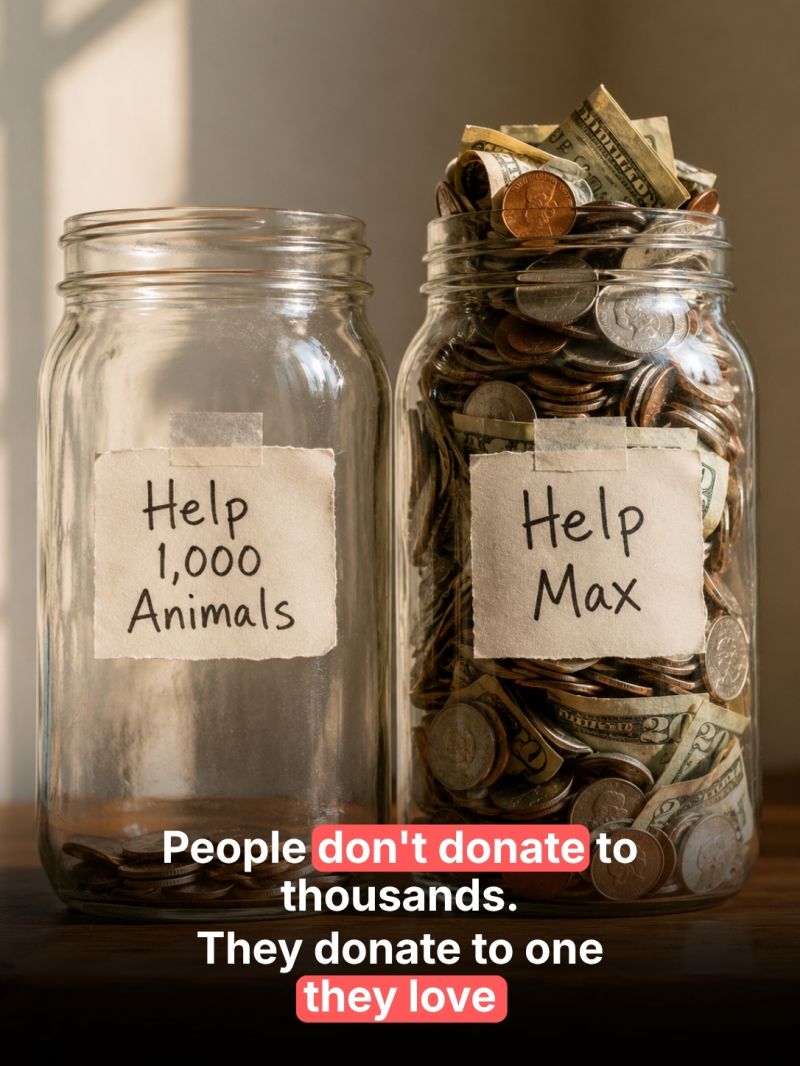
People donate more to one named individual than to statistics about thousands.
This is called the identifiable victim effect. It was first documented by economist Thomas Schelling in 1968 and has been replicated so many times across so many contexts that it is now one of the most reliable findings in behavioral economics.
The implication for shelter fundraising is direct and uncomfortable.
Most shelter appeals are built entirely on the approach the research says works least.
What the Research Actually Shows
People give to individuals, not groups
In a widely cited study, participants were given money and asked to donate to a charity. One group saw a statistical description of the problem. The other group saw the story of one child named Rokia.
The group that read Rokia’s story donated twice as much.
When researchers combined the individual story with the statistics, donations dropped. The statistics made the emotional connection feel less personal, not more credible.
Specific details increase giving
The more concrete and individual the description, the more donors give. A name increases giving. A physical description increases it further. A personality detail, something the animal loves or does habitually, increases it further still.
Vague appeals to help animals in general consistently underperform specific appeals to help one named animal with one specific story.
Donors give to continue a story, not to solve a problem
Research into recurring giving shows that donors who connect with a specific animal and receive updates about that animal give again at significantly higher rates than donors who give to general campaigns.
They are not donating to the cause. They are following a story they now have a stake in.
Emotional connection precedes rational decision
Brain imaging studies show that the emotional response to an individual story activates before the rational evaluation of whether to give. Donors decide emotionally and justify rationally.
This means leading with statistics, no matter how compelling, works against the natural sequence of the giving decision. Emotion first. Information second.
What This Means for Your Fundraising Appeals
Replace this
“Every year, 6.3 million animals enter US shelters. Without your help, many of them will not make it.”
With this
“Bruno has been here for 11 months. He carries a tennis ball everywhere he goes, not to play with, just to have it with him. He needs a home by Friday.”
The second appeal will raise more money. Not because it is more emotionally manipulative. Because it gives the donor someone specific to help.
The three elements that make an appeal work
A name. Something the animal does that is specific and observable. What will happen next, either a good outcome if the donor acts, or an honest account of what is at stake.
That is the entire formula. Everything else is secondary.
The Mistake Most Shelters Make
Adding statistics to an individual story to make it feel more credible.
The research is clear on this. Statistics reduce the emotional impact of an individual story. They shift the donor’s brain from feeling mode into analytical mode at exactly the wrong moment.
Use statistics in grant applications, board reports, and media pitches where analytical credibility is the point.
In donor appeals, use stories. Only stories.
One Change to Make This Week
Find one aggregate appeal in your current communications.
An email, a social post, a donation page section that talks about thousands of animals or annual statistics.
Replace it with one animal. One name. Three specific details.
Run it for 30 days and compare the response rate to the previous version.
The numbers will tell you the rest.
Created by BarkLogue. Helping shelters turn individual animal stories into donations. barklogue.com