A Practical Guide for Shelter Staff and Volunteers
By Herb Locke, Founder of BarkLogue
The Only Rule That Matters
Most animal profiles describe what an animal looks like and list what they can tolerate.
Breed. Age. Size. Good with cats. No young children.
That is a medical record, not a profile.
The person reading it learns nothing about who this animal is. And who they are is the only thing that will make someone drive across town on a Saturday morning to meet them.
One rule changes everything.
Describe who the animal is, not what they look like.
The photo already shows what they look like. Your job is to show what the photo cannot.
Before You Write Anything: The 10 Questions
Find the staff member or volunteer who knows this animal best. Ask them these questions and write down exactly what they say.
Their words are usually better than anything you will come up with later at a desk.
- What is the first thing this animal does when you walk into the room?
- What is their favorite part of the day?
- What do they do that always makes you smile?
- What are they afraid of, and how do they show it?
- What do they love more than anything?
- Do they have any funny habits or rituals?
- How do they ask for attention?
- What is their energy like on a typical day?
- What kind of home do you think they are waiting for?
- What do you wish every potential adopter knew before they met them?
Write the answers down word for word. The raw answers are the profile. You are just organizing them.
The 3-Part Formula
Every strong profile has three parts. Each part should be two to four sentences. The whole profile should be between 100 and 250 words.
Part 1: The Opening Detail
Start with one specific, concrete detail that makes this animal real.
Not their breed. Not their age. One thing only this animal does.
Bad: “Meet Luna, a beautiful 3-year-old tortoiseshell cat looking for her forever home.
Good: “Luna has a system. Every morning she sits on the left side of the windowsill and chirps at the birds outside for exactly 20 minutes. Then she finds the nearest warm human and falls asleep on their feet.”
The specific detail is what stops someone from scrolling past.
Part 2: Who They Are
Two to three sentences about their personality. Use the answers from your 10 questions.
Avoid words like loving, gentle, and sweet. Every profile uses those words. They have lost all meaning.
Instead, show what those words look like for this specific animal.
Not this: “Max is a loving and affectionate dog who enjoys cuddles.”
This: “Max will find you wherever you are in the house. He does not need to be on you. He just needs to be in the same room, usually about two feet away, watching to make sure you are okay.”
Part 3: The Invitation
End with one or two sentences that describe the right person for this animal and leave the door open.
Not a plea. Not pressure. Just an honest picture of the match.
“If you have a sunny apartment and a patient heart, Charlie might be exactly who you have been looking for.”
Before and After
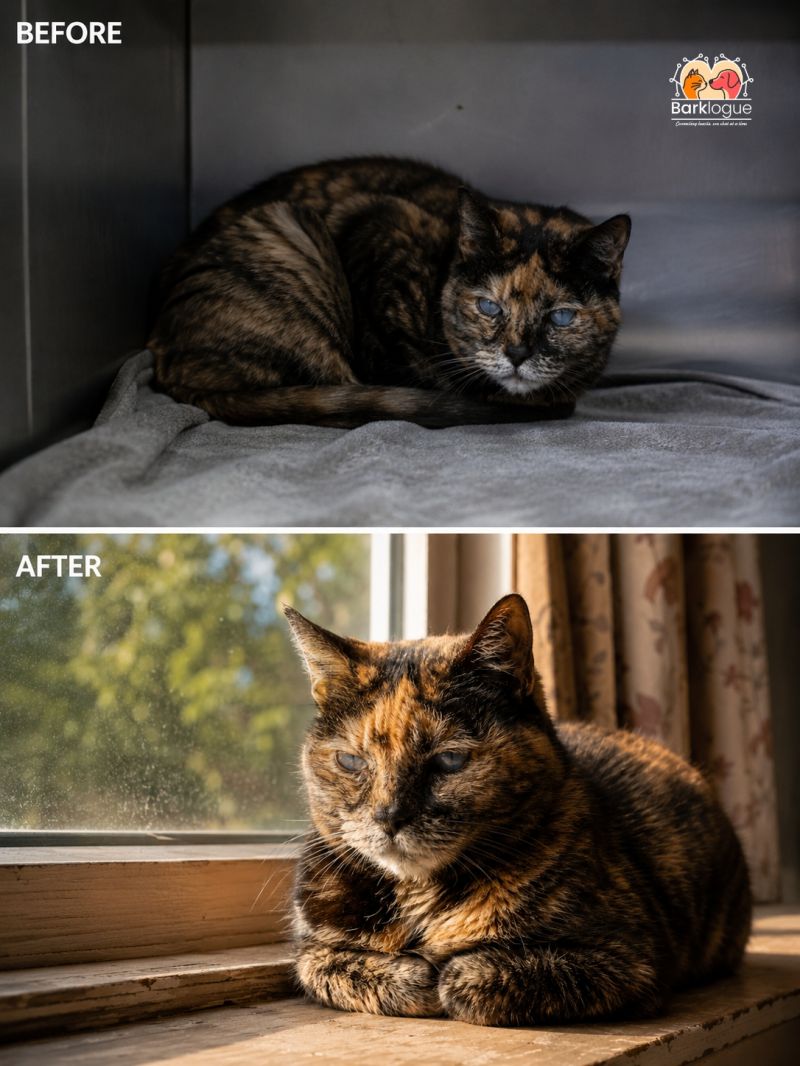
Before: “Mittens. Female. Domestic shorthair. 14 years old. Partially blind. Indoor only. No young children. Available for adoption.”
Nine months. Zero serious inquiries.
After: “Mittens has a system.
Whenever a window gets good light, she makes a specific chirping sound, walks to it slowly, and stays for exactly as long as the sun lasts. She has been doing this her whole life and she has no intention of stopping.
She is 14, partially blind, and completely certain about what she likes. She does not need excitement. She needs a quiet home with good windows and a person who understands that some mornings are for sitting in the sun and nothing else.
If that sounds like your kind of morning, Mittens has been saving you a spot.”
Adopted within three weeks.
The Five Mistakes That Kill Adoptions
Starting with the name and age. Every profile does this. Start with a detail or an action instead.
Using words that appear in every profile. Loving, sweet, gentle, playful. Replace them with specific behaviors.
Listing tolerances instead of preferences. Good with dogs tells an adopter what the animal can handle. It does not tell them what the animal loves.
Being vague about what the animal needs. If they need an experienced owner, say so clearly. The right person is out there. Help them find each other.
Writing for every possible adopter. A profile that tries to appeal to everyone appeals to no one. Write for the specific person who would be the right fit.
The Quick Review Checklist
Before you publish any profile, check these five things.
- Does the opening sentence describe something specific and unique to this animal?
- Have you replaced vague words with specific behaviors?
- Have you been honest about what this animal needs?
- Could this profile describe any other animal in your shelter, or only this one?
- Does the ending invite the right person rather than beg for any person?
If the answer to the fourth question is any other animal, rewrite it.
A good profile is specific enough that only one animal in the world could have it.
The Fill-In Template
Use this as a starting point.
[Animal name] has a habit.
[One specific thing this animal does, a ritual, a quirk, a behavior that is uniquely theirs.]
[Two to three sentences about their personality using specific behaviors rather than adjectives.]
[One to two sentences about what they need, written honestly.]
[One to two sentences inviting the right person.]
The details are already there. Your staff know them.
All this guide asks is that you write them down.
This guide was created by BarkLogue, the AI platform that gives shelter animals a voice and helps shelters raise more donations. Visit barklogue.com or book a call at calendly.com/blang-barklogue/30min